From Dashboards to Conversational AI: The Evolution of UI in IT Products
From Text to Charts, to Conversation
The way IT teams interact with technology has changed dramatically over the years. From early text-based interfaces to today’s dashboards and now conversational AI, each stage has reshaped how we monitor, diagnose, and understand complex IT environments. But while dashboards gave us visibility, they often led to more questions than answers. In this post, we briefly explore the evolution of UI in IT products and how conversational AI is bridging the gap between data and understanding.
In the Beginning…
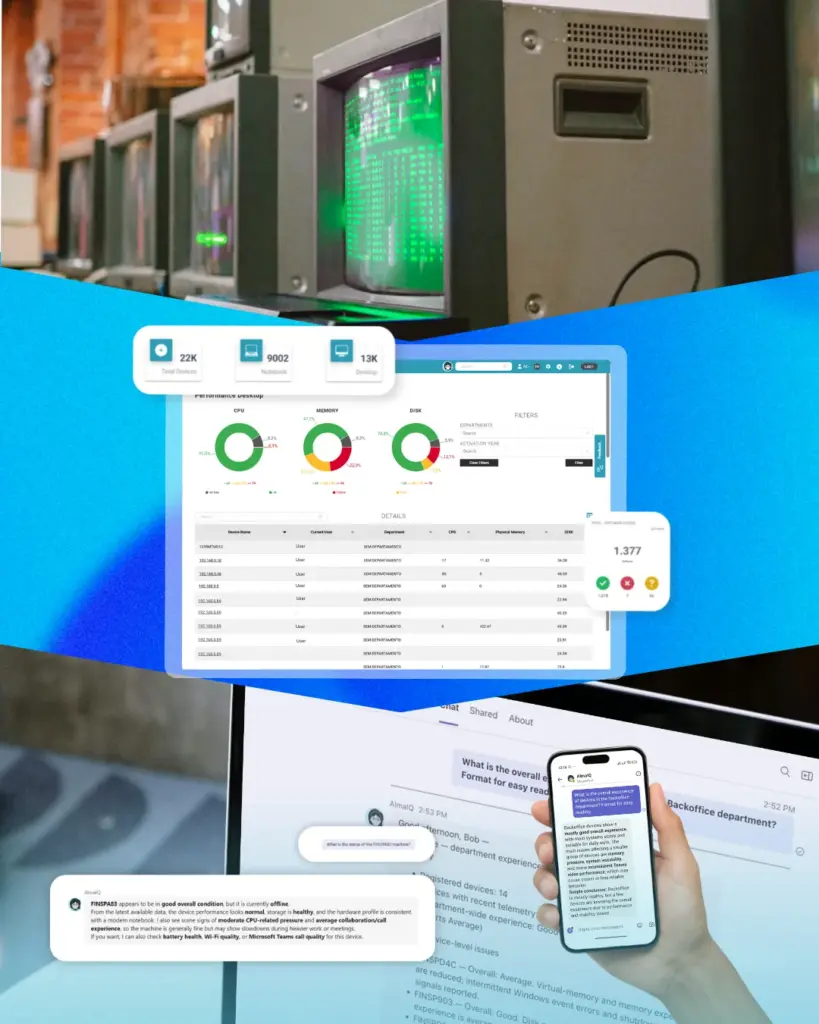
Users have been doing text-based interactions with computers for a very long time. Indeed, early IT systems communicated entirely through text or rudimentary character-based graphics. The information that was communicated was sometimes dense, but it was generally complete.
We eventually evolved from simple input statements and responses to complex methods involving all manners of input fields with things like dropdown selections and more. Output has similarly moved beyond text-based responses. While informative, we all know that pictures can say a thousand words and often enable the reader to better draw conclusions. Graphics became the next stage in our evolution.
Welcome to the Dashboard Era
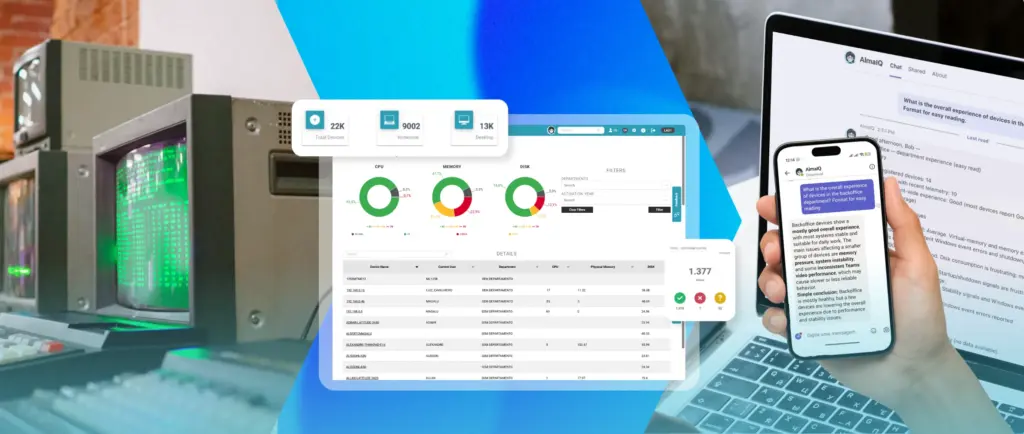
Charts, graphs, and tables transformed how IT teams understood their environments. Suddenly, trends were visible at a glance. Things like capacity utilization became a line graph; alert volumes became a bar chart; comparing data from different sources or correlating events across time became faster and easier. Charts and the like became dashboards and multiplied into panels of dashboards. Indeed, they were all easier on the eyes and certainly informative, yet at the same time perhaps a bit overwhelming.
Think of trying to answer a simple question, like “why did performance degrade last Tuesday?” Or “why is the Finance team experiencing poor quality video conferences when the conferencing software monitor says everything is fine?” To answer these questions you might need to cross-reference multiple different charts, mentally correlate timestamps, and still arrive at a best guess rather than a clear answer. And critically, no graph or dashboard suggests what you should do. The interpretation and the recommendation are still entirely on the analyst.
Conversational AI, a New Paradigm Has Emerged
Instead of navigating dashboards, you simply ask a question in plain language (English, Spanish, Portuguese, etc.) “How were Microsoft Teams calls for the past week?” asks a simple question for which a clear response – with recommendations for detected issues – could be provided. This would entail looking at a variety of Microsoft Teams metrics and perhaps correlating them with WiFi quality for the devices in question, as well as investigating device resource usage and maybe even device CPU temperature. Detecting patterns among all of this data, aggregating and correlating it, and presenting it in a concise, actionable understandable fashion (which could be comprised of text and/or tailored graphics) is made vastly simpler via a conversational AI.
Note that this conversational approach will not replace visuals. The two techniques are complementary. Coming into work an IT helpdesk technician might examine a dashboard and then use the conversational AI to get more details and actionable recommendations. Indeed, after having taken action, a dashboard could be used to quickly confirm anticipated results.
Why Conversational AI Matters for IT Teams
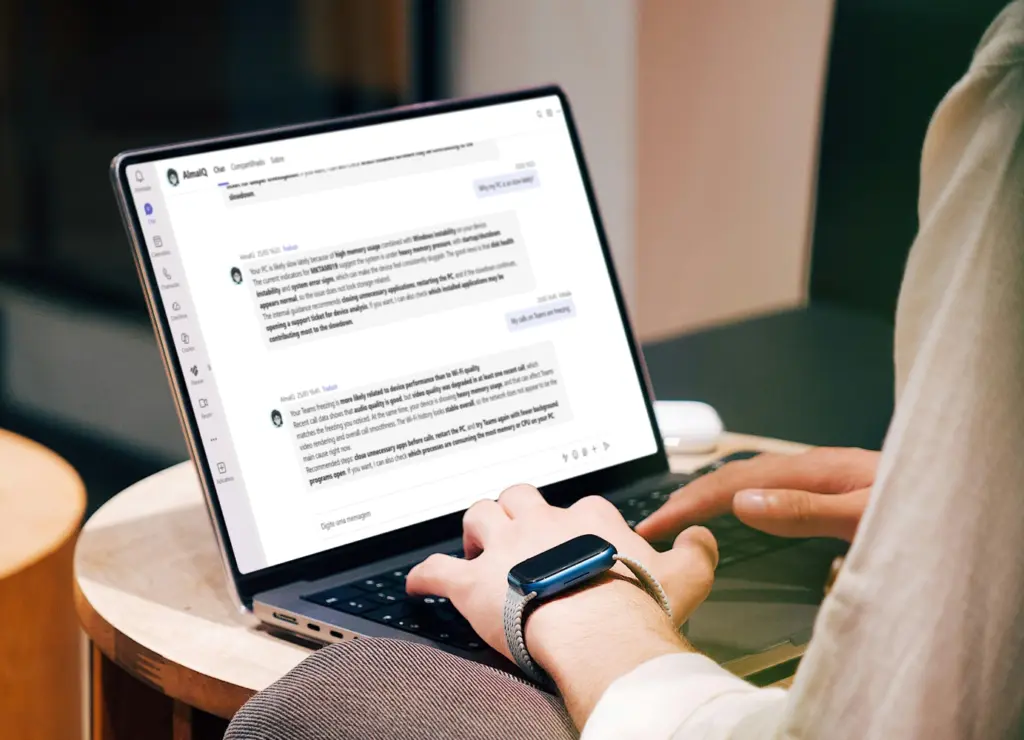
This evolution isn’t just aesthetic — it’s operational. Faster answers mean faster decisions. Reducing the cognitive load of dashboard-hopping means analysts spend less time hunting for insight and more time acting on what they’ve learned. And because AI responses can be tailored to the specific question asked, there’s less noise to filter through.
The interfaces we use shape how we think about problems. Text gave us data. Dashboards gave us visibility. Conversational AI is giving us something more convenient and closer to understanding. This is a very meaningful step forward.
At Almaden, we’re very pleased with the point-and-click UI that we’ve created for our Collective IQ® Digital Employee Experience (DEX) solution. Indeed, it helps fulfill our claim of “Simple, Effective DEX”. Having added conversational AI capabilities, in the form of our AlmaIQ™ intelligent concierge, is now like having a virtual employee to guide IT (and even employees) much more effectively and efficiently.