
Digital Employee Experience (DEX): why isolated technical metrics are no longer enough
Digital transformation and remote work have made the user’s experience with IT a core operational requirement.
Many organizations still measure IT success through traditional metrics such as response time, system availability, and the number of tickets resolved. These indicators, while useful, hide a more complex reality.
A server can be 99,9% available and yet an employee may still lose 30 minutes per day due to a slow application or an unstable connection. This kind of issue rarely generates a ticket. The employee simply adapts their behavior, loses productivity, and becomes less engaged.
Minutes lost every day accumulate into hours every month. With incomplete data, IT cannot measure this phenomenon.

What an effective IT experience means
A well designed IT experience does not simply mean an absence of serious outages. It means that the employee, whether in the office, at home, or on the move, has reliable access to devices, applications, and connectivity to perform their tasks without friction.
When the experience is poor, the impact extends beyond productivity.
- Customer satisfaction declines, because service or delivery suffers.
- Team morale deteriorates, as work becomes a daily struggle against technology.
- Talent retention is undermined, because skilled professionals avoid environments where IT is a barrier.
Technical data plus user perception: the necessary combination
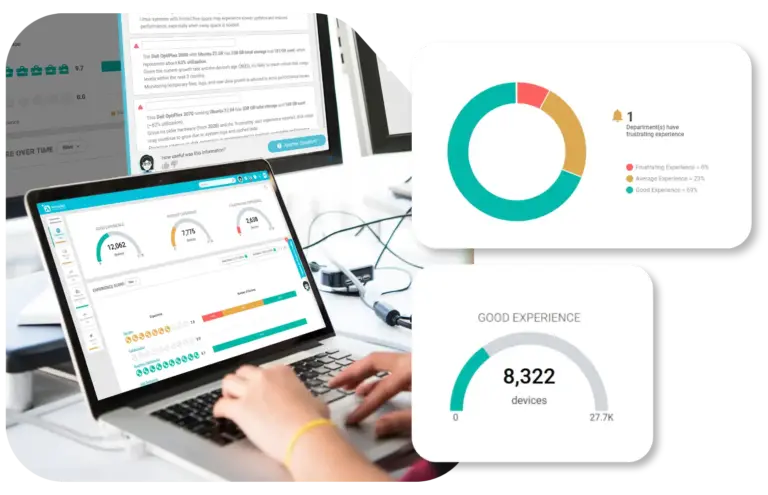
The traditional monitoring approach focuses on infrastructure metrics such as CPU, memory, disk usage, and network latency. This is necessary but insufficient.
To anticipate issues and act before they affect the business, IT must correlate two layers of information.
- Objective telemetry data, collected continuously from devices, including hardware, software, performance, errors, and crashes.
- Signals of user experience and sentiment, such as application freezes, perceived slowness, call quality in collaboration tools, and contextual surveys with employees.
Correlating these layers enables IT to identify patterns of degradation that have not yet generated tickets. With automation and continuous analysis, teams can resolve issues before the user even notices them.
The shift in posture, from reactive to predictive
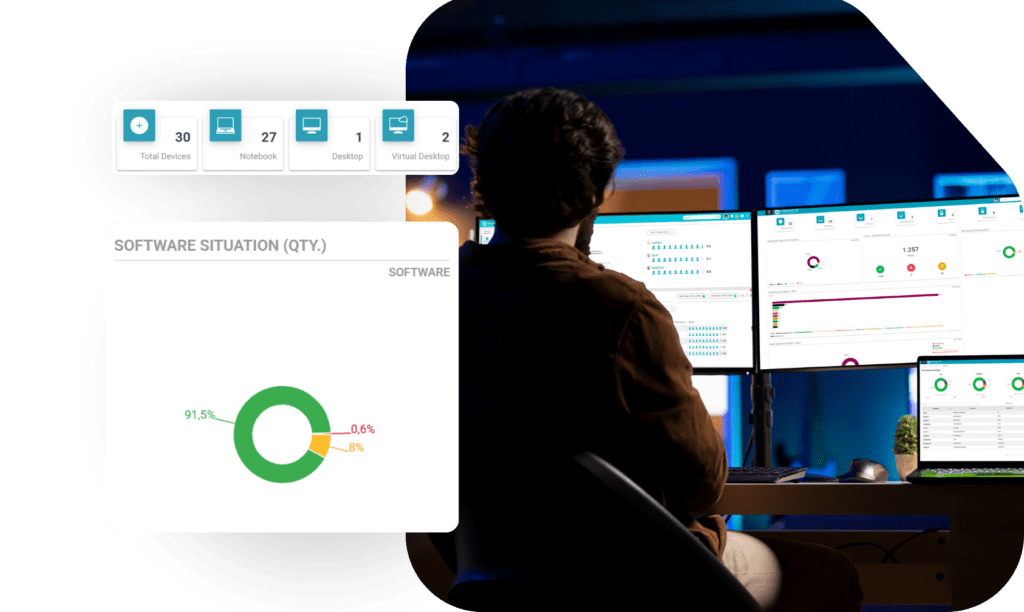
An IT department that operates in firefighting mode cannot scale. Solving one ticket does not prevent the next. The team remains overloaded, and issues that go unreported stay invisible.
Evolution happens when IT adopts a proactive posture, built on:
- Continuous analysis of system data
- Detection of patterns and anomalies
- Recommendations for corrective actions
With this approach, the IT team stops being a cost center that processes tickets and becomes an enabler of productivity and innovation.
Solutions that remove barriers
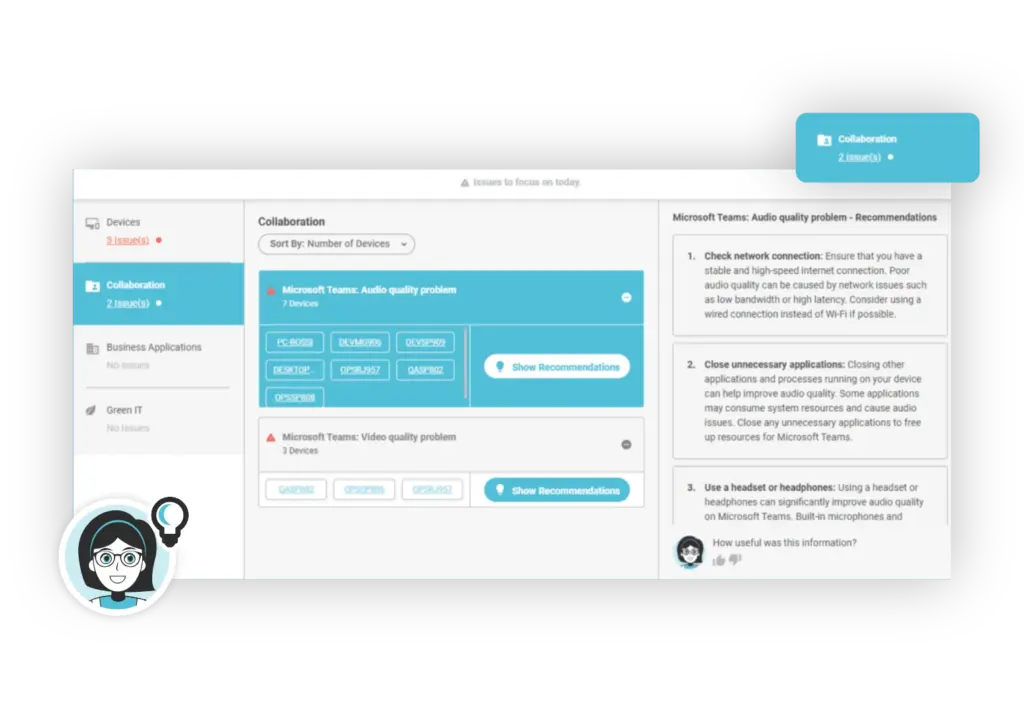
Almaden developed Collective IQ® to remove obstacles that affect team performance and results.
The CIQ DEX platform combines performance monitoring, IT asset analysis, and employee insights. With this, IT teams can:
- Identify objective problems, such as slowness, failures, and bottlenecks
- Anticipate incidents using artificial intelligence
- Understand the real user experience through surveys and metrics
- Correlate technical data with its impact on productivity
Collective IQ® ITAM provides visibility and management of IT assets, optimization of investments, operational efficiency, and compliance.
These tools empower IT to operate in a predictive way, anticipating failures across any work environment.
Conclusion
The era of digital transformation and remote work demands more than just technical availability. It requires an integrated view that combines objective data with human perception, anticipation, and automation.
IT that merely reacts to tickets will keep losing productivity and engagement. IT that adopts a predictive approach, guided by the real experience of the employee, becomes a competitive advantage.
Want to know how this approach can work for your organization?
Contact Almaden to learn how Collective IQ to schedule a personalized demo.