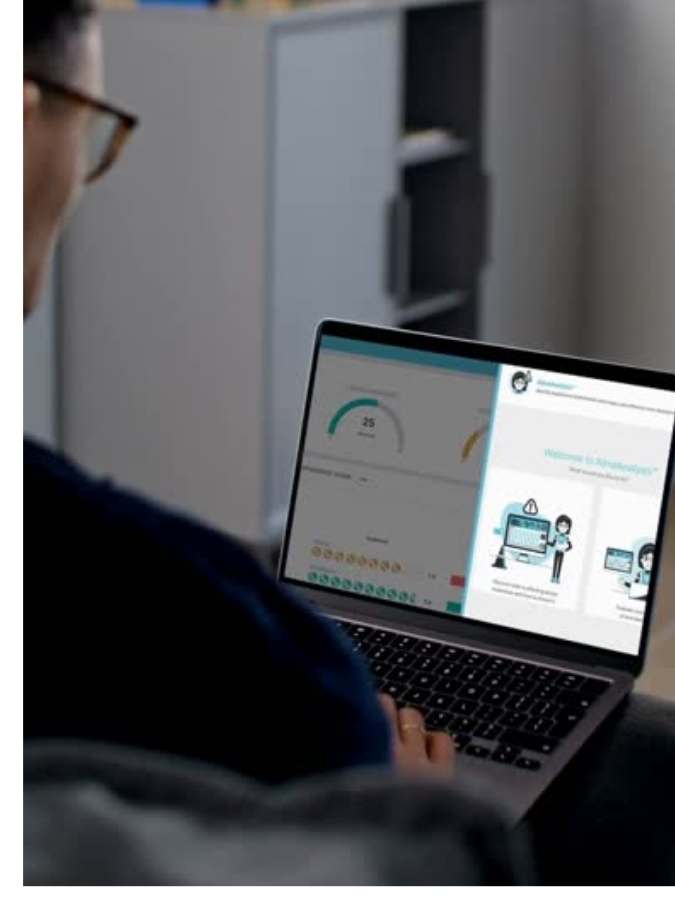
The Magic of AlmaAnalysis™ Insights
Turn technical data into clear cost-benefit decisions
Deciding whether to upgrade or replace an employee’s device involves far more than technical specifications. Costs, productivity impact, physical hardware limitations, and even the end-user experience all need to be taken into account.
AlmaAnalysis™ Insights was created to support exactly this kind of decision, combining IT asset management data (ITAM), Digital Employee Experience (DEX) data, and artificial intelligence to deliver actionable, well-reasoned, cost-benefit recommendations. The facility is intended for use by IT Staff and Analysts, referred to here as “users.”
In this article, we explain how the feature works, which technical decisions are part of the flow, and how AI is used in each stage.
Device selection and analysis context
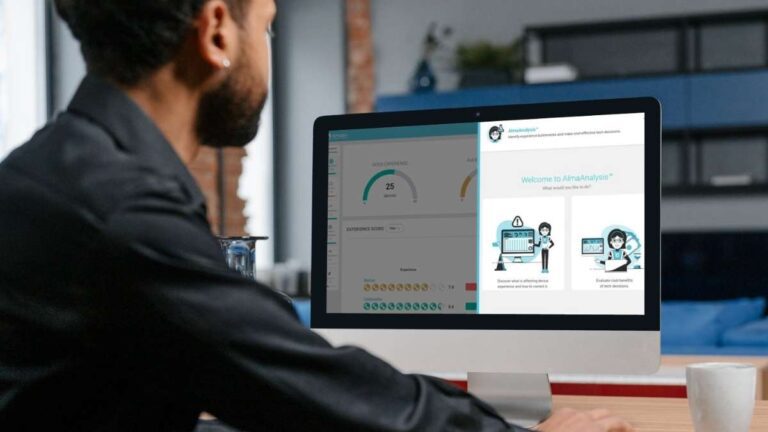
When accessing Insights, users can select up to 50 devices for simultaneous analysis. Almaden recommends selecting no more than 12 because it is a reasonable size dataset, but up to 50 can be analyzed. This approach makes it possible to evaluate a meaningful set of assets without compromising the individual analysis of each device.
Users can also select their preferred currency (for example, Brazilian real or US dollar) for cost analyses. This parameter is essential, as it directly influences the price searches, ensuring that returned values align with the customer’s region and market — such as prices in US dollars for the United States or Brazilian reais for Brazil.
Collection of technical and experience (DEX) data
For each selected device, Insights gathers a standardized set of information, including:
• Device identification and name
• Type (PC desktop or notebook, or Mac device)
• Manufacturer and model
• Total memory and storage capacity
• CPU model (when available)
• Average CPU, memory, and disk usage percentages
• Analyzed user experience indicators for each component
These data are from Almaden® Collective IQ® ITAM and DEX solutions and go beyond raw technical data. They reflect digital device configurations, measurements, and the employee’s perceived experience as they endeavor to perform their job.
Stage 1: understand each device’s scenario
At this point the goal is not to compare costs or decide on replacement, but to understand the scenario of each device. This is done by Insights integrating the structured technical and experiential data, then using artificial intelligence (AI) to consider:
• Where the user experience is being impacted
• Which components are associated with that experience
• What technical options exist
The AI evaluates each device independently, always accounting for real-world constraints such as:
• Differences between desktops, notebooks, and Mac devices
• Physical upgrade limitations (e.g. some devices cannot be upgraded)
• Component compatibility with a given manufacturer and model
Even when an upgrade is not physically feasible, the system keeps this information as technical context for the subsequent stages of analysis.
Stage 2: use market APIs and regional pricing
Based on the first analysis, the system automatically generates structured search keys that feed integration with the SERPER (Shopping) API.
This step is responsible for retrieving:
• Real market prices for suggested components
• Prices of new devices that meet equivalent specifications
The user-defined currency is applied directly to these searches, ensuring that:
• Prices reflect the correct region
• The cost-benefit analysis remains consistent with the local market
This prevents distorted comparisons and makes the insights more reliable.
Stage 3: data normalization and preparation
Because data returned by market APIs can vary significantly, Insights uses AI to:
• Clearly separate upgrade costs from new device costs
• Normalize values, currencies, and links
• Organize information in a consistent format for comparison
This step ensures that the final analysis is based on clean, comparable data aligned with company’s needs.
Stage 4: cost-benefit analysis: upgrade or replacement
With all information consolidated, Insights performs the final AI analysis, now focused exclusively on cost-benefits and feasibility. At this stage:
• Performance has already been validated
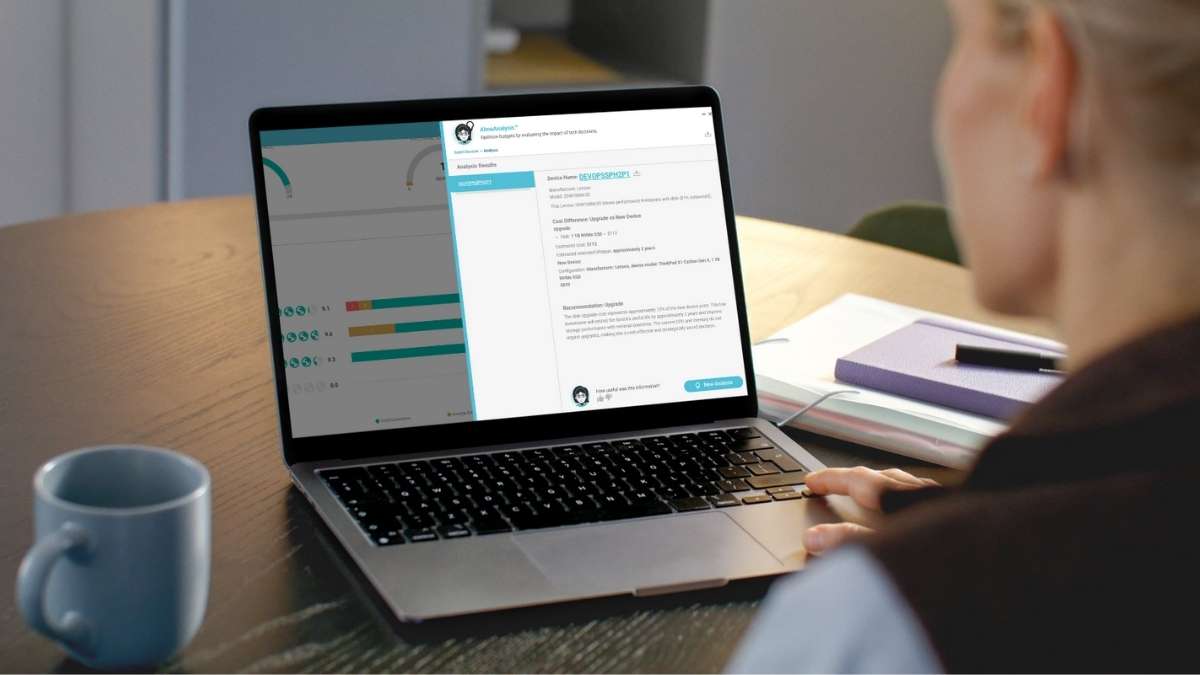
• AI compares scenarios and provides recommendations
Key factors considered include:
• Total upgrade cost versus the cost of a new device
• Physical hardware limitations
• Operational impact
• Company objectives
• Assurance that a replacement device represents a meaningful improvement
The outcome is a clear recommendation for one of the following:
• Upgrade
• Device replacement
• No action required
Each recommendation is always accompanied by an objective, easy-to-understand justification.
How estimated lifespan extension factors into decisions
A common customer question concerns the estimated lifespan extension of a device after an upgrade, which in many cases appears as approximately two additional years.
This value is not hardcoded into the system. Rather, it is an AI interpretation based on the device context, type of upgrade, and usage scenario.
In certain cases, the AI identifies that a specific set of improvements is likely to extend the device’s useful life within that average range. This estimate may evolve as new metrics and refinements are incorporated into the solution.
Exporting and sharing insights
After the analysis, users can:
• Export insights per device
• Export the complete set of analyses
• Share results via email
This facilitates decision-making not only for technical teams, but also for finance, management, and leadership. It also makes financial and resource planning easier.
A continuously evolving solution
AlmaAnalysis is currently in its first iteration, designed with a clear vision for ongoing evolution. Planned improvements include:
• Continuous refinement of AI prompts
• Inclusion of new metrics, such as battery health
• Use of depreciation data for more accurate recommendations
• Evaluation of different AI models and approaches
These enhancements aim to make results increasingly strategic, accurate, and aligned with company needs.
Conclusion
Collective IQ® AlmaAnalysis™ Insights intelligently collects and connects employee experience, technical data, and market pricing in a single flow, leveraging the added value of AI to transform complex information into clear, trustworthy recommendations. More than just a technical analysis, Insights was designed to support real-world business decisions that IT often faces.
Want to learn how your company can also achieve this level of efficiency?
Schedule a Collective IQ® demo.